






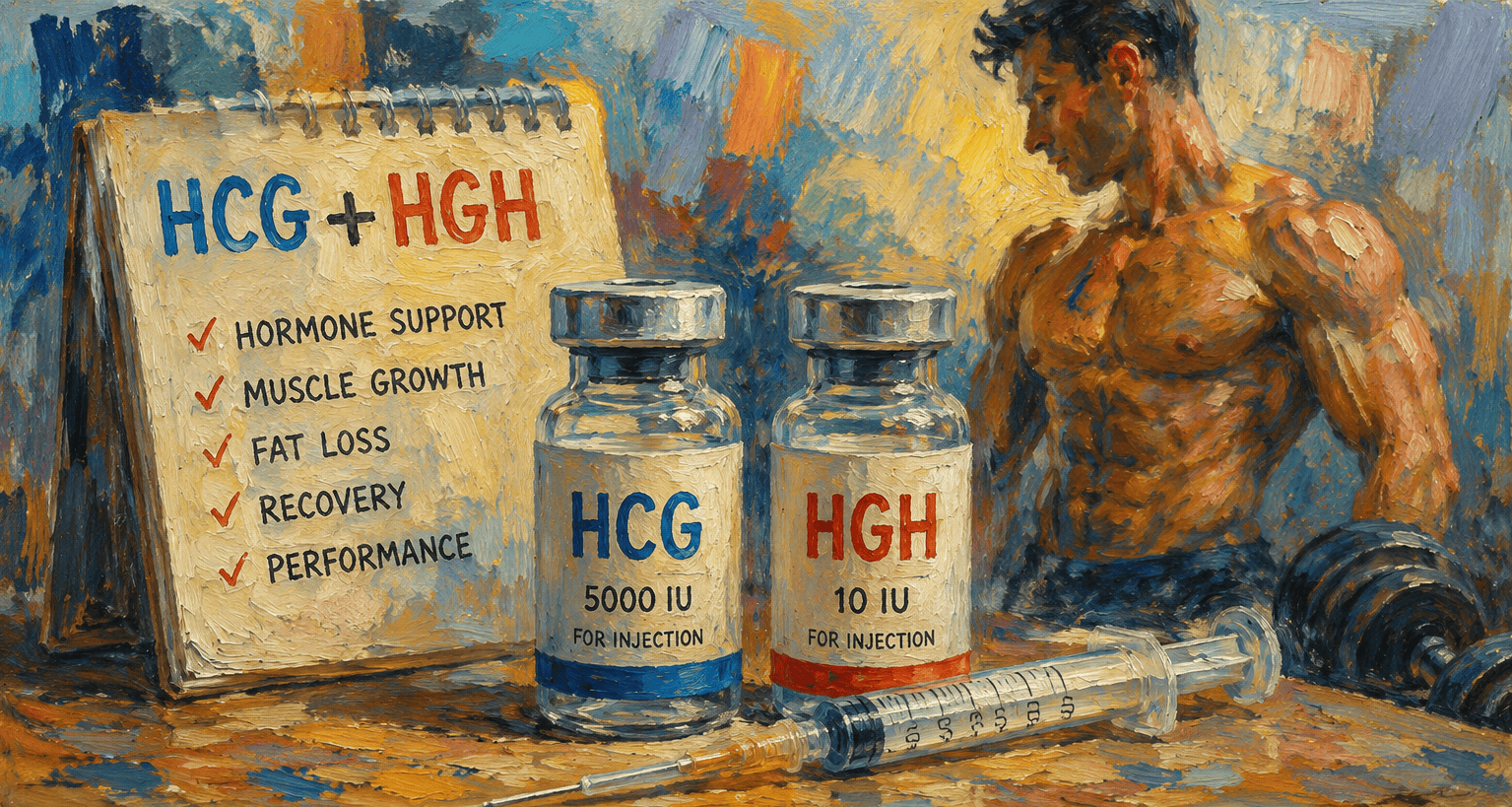
Why HCG and HGH Are So Widely Discussed
In the world of hormone optimization and peptide research, two compounds consistently stand out: HCG (Human Chorionic Gonadotropin) and HGH (Human Growth Hormone).
Both are often grouped together in discussions about metabolism, performance, recovery, and hormonal balance. However, despite their popularity, they are fundamentally different in structure, function, and purpose.
At Pharma Pep Labs (https://pharmapeplabs.com/), interest in HCG + HGH continues to grow as more people explore peptide-based wellness strategies.
This guide breaks down what they are, how they work, and why they are frequently used in combination protocols.
What is HCG?

HCG (Human Chorionic Gonadotropin) is a naturally occurring hormone produced during pregnancy. In medical and research contexts, it is widely studied for its role in the reproductive hormone system.
HCG primarily works by mimicking luteinizing hormone (LH), which signals the body to support testosterone production and reproductive function.
Key Roles of HCG:
- Supports natural testosterone production
- Helps regulate the hypothalamic-pituitary-gonadal (HPG) axis
- Plays a role in fertility and reproductive hormone balance
- Used in clinical hormone protocols under medical supervision
Because of its hormone-signaling properties, HCG is often included in post-cycle or hormone-support strategies in research environments.
What is HGH?
HGH (Human Growth Hormone) is a peptide hormone produced by the pituitary gland. It plays a major role in growth, metabolism, and cellular repair throughout the body.
Unlike HCG, HGH directly influences growth and regeneration pathways.
Key Roles of HGH:
- Supports muscle growth and tissue repair
- Promotes fat metabolism and energy utilization
- Contributes to skin elasticity and recovery processes
- Supports overall cellular regeneration
HGH levels naturally decline with age, which is why it is frequently discussed in anti-aging and performance optimization contexts.
HCG vs HGH: The Key Difference
Although both are hormones, HCG and HGH serve completely different biological purposes:
| Feature | HCG | HGH |
|---|---|---|
| Primary Function | Hormone signaling (reproductive axis) | Growth, repair, and metabolism |
| Source | Placental hormone (naturally occurring in pregnancy) | Pituitary gland hormone |
| Main Focus | Testosterone & fertility support | Tissue growth & regeneration |
| System Target | Reproductive system | Musculoskeletal & metabolic systems |
In simple terms:
- HCG = hormonal signaling regulator
- HGH = growth and recovery hormone
Why HCG + HGH Are Often Discussed Together
In hormone optimization discussions, HCG and HGH are sometimes mentioned together because they influence different but complementary systems.
When studied in combination contexts, they are associated with:
- Hormonal balance support
- Recovery and performance optimization
- Metabolic and endocrine system interaction
However, they are not interchangeable, and each operates through completely separate biological pathways.
The Role of Peptides in Modern Hormone Research
Both HCG and HGH fall under the broader category of peptide and protein-based hormones.
Peptides are increasingly studied for their ability to:
- Influence natural hormone signaling
- Support metabolic and regenerative processes
- Assist in research on aging, recovery, and performance
At Pharma Pep Labs, peptide-based compounds are part of a growing field of scientific interest focused on endocrine and metabolic research.
Important Safety and Research Notice
HCG and HGH are biologically active hormones that should be handled responsibly and only used in appropriate medical or research settings.
This content is for informational and educational purposes only and does not constitute medical advice.
Final Thoughts
Understanding the difference between HCG and HGH is essential for anyone exploring hormone-related research or peptide science.
While HCG focuses on reproductive hormone signaling, HGH is centered on growth, metabolism, and cellular repair. Together, they represent two distinct but important areas of endocrine function.
To learn more about peptide research and hormone-related compounds, visit:
👉 https://pharmapeplabs.com/