
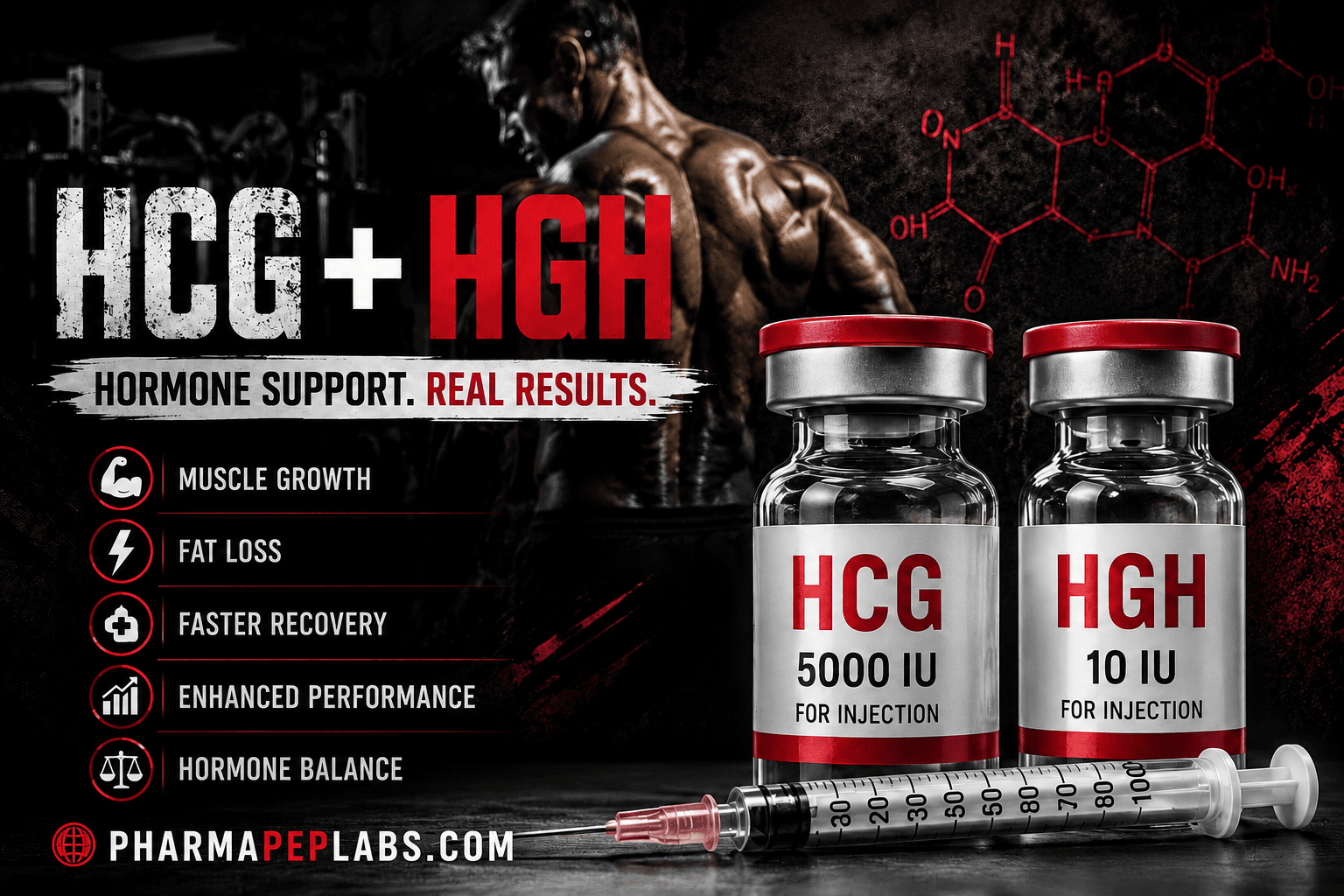

Peptides have become one of the most discussed topics in sports science, performance research, and regenerative medicine. While they are often mentioned alongside anabolic steroids, peptides are fundamentally different compounds with distinct mechanisms of action.
At Pharma Pep Labs, we are committed to providing high-quality research compounds and educational resources to help researchers and professionals better understand peptide science. This guide explores what peptides are, how they work, and why they continue to generate interest in anabolic and performance-related research.
What Are Peptides?

Peptides are short chains of amino acids that serve as signaling molecules throughout the body. They help regulate a wide range of biological functions, including hormone release, tissue repair, metabolism, and cellular communication.
Unlike anabolic steroids, peptides do not belong to the steroid hormone family. Instead, they interact with specific receptors or signaling pathways to influence normal physiological processes.
Peptides vs. Anabolic Steroids
Although peptides and anabolic steroids are frequently discussed together in fitness communities, they are not the same.
| Peptides | Anabolic Steroids |
|---|---|
| Short chains of amino acids | Synthetic derivatives of testosterone |
| Act through targeted biological signaling | Directly activate androgen receptors |
| Investigated for a variety of medical and research applications | Used medically for specific conditions but also misused for performance enhancement |
| Different mechanisms and risk profiles | Greater potential for hormonal suppression when misused |
Understanding these differences is essential for anyone researching performance-enhancing compounds.
Why Are Peptides Popular in Research?
Researchers continue to study peptides because of their ability to influence specific biological pathways. Areas of investigation include:
- Muscle recovery
- Tissue regeneration
- Growth hormone signaling
- Metabolic function
- Body composition
- Exercise recovery
Many peptide compounds remain investigational, and their effectiveness and safety may vary depending on the specific peptide and intended use.
Common Categories of Research Peptides
Several peptide classes are widely discussed in scientific research, including:
Growth Hormone-Releasing Peptides (GHRPs)
These peptides are studied for their ability to stimulate the body’s natural release of growth hormone.
Growth Hormone-Releasing Hormone (GHRH) Analogues
Researchers investigate these compounds for their role in supporting growth hormone signaling pathways.
Recovery and Tissue Research Peptides
Some peptides are being explored for their potential roles in tissue repair, recovery, and regenerative medicine, although many remain investigational and require further clinical research.
Potential Advantages of Peptide Research
Depending on the compound being studied, peptides may be investigated for their potential to support:
- Recovery after exercise
- Lean body composition
- Muscle protein synthesis
- Connective tissue health
- Cellular signaling
- Hormone regulation
These areas remain active fields of scientific investigation, and results observed in research settings may not translate to proven clinical benefits.
Quality Matters
When working with research peptides, product quality is essential.
Reliable research compounds should be supported by:
- Strict quality control
- High manufacturing standards
- Batch consistency
- Accurate labeling
- Proper storage and handling
Choosing a trusted supplier helps promote reliable and reproducible research outcomes.
Why Choose Pharma Pep Labs?
At Pharma Pep Labs, quality and scientific integrity are at the core of everything we do. We strive to provide premium research compounds that meet rigorous quality standards while supporting the research community with educational resources.
Our commitment includes:
- Premium-quality research compounds
- Consistent manufacturing standards
- Reliable quality control
- Secure ordering process
- Dedicated customer support
Visit https://pharmapeplabs.com/ to explore our range of research products and educational resources.
Frequently Asked Questions
Are peptides the same as anabolic steroids?
No. Peptides are amino acid chains that act as biological signaling molecules, while anabolic steroids are synthetic hormones derived from testosterone. They differ in structure, mechanism, and clinical applications.
Why are peptides used in research?
Researchers study peptides because they may influence biological processes such as hormone signaling, tissue repair, metabolism, and recovery. Many peptide compounds remain investigational.
Are all peptides approved for human use?
No. While some peptide-based medications are approved for specific medical conditions, many peptides marketed online are investigational and have not been approved for general therapeutic use.
Final Thoughts
Peptides continue to play an increasingly important role in biomedical and performance-related research. Although they are often grouped with anabolic steroids, they are a distinct class of compounds with unique biological functions and research applications.
As scientific understanding evolves, high-quality research and responsible sourcing remain essential. At Pharma Pep Labs, we are dedicated to supporting researchers with premium-quality compounds and educational content designed to promote informed decision-making.